

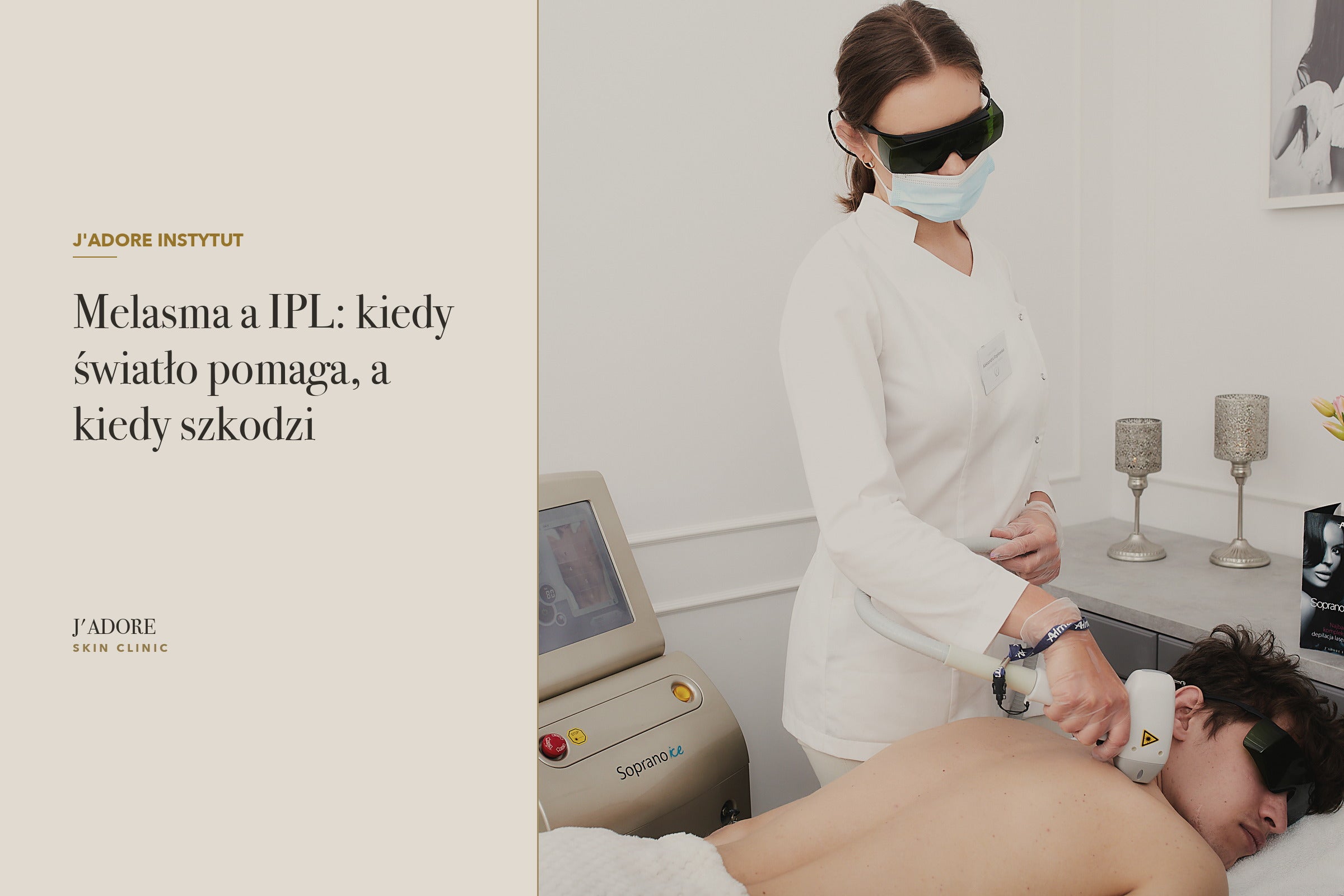
Melasma is one of the most challenging pigmentation issues in dermatology — not because it is dangerous, but because it is exceptionally capricious. The sun exacerbates it. Hormones awaken it. Heat irritates it. And IPL, or intense pulsed light, is simultaneously touted as its remedy and as one of the factors that can worsen it. Both statements can be true — it depends on when, how, and on whom the treatment is performed. This article is not meant to discourage or encourage you to try IPL. It is meant to help you understand what lies behind the conflicting opinions online and what questions are worth asking before you decide.
What exactly is melasma — and why is it important
Melasma is a chronic, acquired pigmentation that appears symmetrically — most often on the forehead, cheeks, temples, and upper lip. The skin produces an excess of melanin in these areas, but not randomly: the mechanism is hormonally and sun-driven, which distinguishes melasma from ordinary sunspots. Therefore, it mainly affects women of reproductive age, intensifies during pregnancy, with hormonal contraception, and in summer — and can return even after it has been lightened. Understanding this nature is crucial because a treatment that does not take into account the mechanism of melasma can produce the opposite effect — and this is where many stories of “IPL ruined my skin” come from that circulate on forums.
The word “melasma” comes from the Greek melas — black. In Poland, it is sometimes referred to as chloasma or the mask of pregnancy, although it is not exclusively a pregnancy-related condition. It is estimated to affect between a few to several percent of women worldwide, more often those with darker skin tones.
Melanin in melasma often deposits at multiple levels of the skin simultaneously — in the epidermis and dermis — which makes treatment more challenging than with typical sunspots. A treatment that works well on epidermal pigmentation may not reach deeper layers. And a treatment that is too aggressive may trigger a rebound effect — a sudden intensification of melasma in response to inflammation or heat.
How IPL works and where the myth of miracles comes from
IPL (Intense Pulsed Light) is a technology that emits a wide range of light absorbed by melanin. In theory: melanin absorbs energy, heats up, fragments, and the body gradually removes it — the spot fades. In practice: with typical sunspots on light skin tones, IPL often works quickly and effectively, hence its reputation as a “treatment for pigmentation.” The problem arises when the same line of thinking is applied to melasma — a pigmentation that operates under completely different rules.
A laser emits one coherent wavelength. IPL works on a broad spectrum that can be filtered. In the context of melasma, this distinction matters — different depths and types of pigmentation respond better to different energy sources. Not every “light treatment” works the same way, which is why serious clinics diagnose before choosing a tool.
IPL has gained a reputation over the years for its proven effectiveness with sunspots, broken capillaries, and evening out skin tone. On forums and social media, these cases are visible and well-documented. Stories of complications with melasma — a deeper, hormonal pigmentation — are less likely to make it into advertisements, more often found in comments under posts saying “be careful.” Hence the gap between expectations and reality that clinics face.
Six myths circulating online
Myth 1: “IPL cures melasma.” IPL can help reduce the visibility of melasma — but it does not treat its cause. Skin that has once produced excess melanin in response to the sun or hormones retains this “memory.” If the triggering factors remain active (sun exposure without protection, unmodified hormonal contraception), pigmentation often returns after a few months. IPL is a tool for managing the symptom, not for eliminating the mechanism.
Myth 2: “The more treatments, the better the effect.” In the case of melasma, this logic can work in reverse. Too frequent energy treatments, at too short intervals, can chronically stimulate melanocytes — the cells that produce melanin — and deepen the problem. This is one of the reasons why experienced specialists plan IPL series carefully, with appropriate breaks and support from lightening products between treatments.
Myth 3: “IPL is safe for every skin tone.” This is not true, and it does not only apply to melasma. IPL works most effectively and safely on light skin tones — where the contrast between the pigmentation and the skin is clear, and the risk of accidentally overheating the melanin in the surrounding tissue is lower. With darker skin tones, the risk of burns and intensification of pigmentation is significantly higher. Skin phototype is crucial information that the specialist must assess before qualifying for treatment — not an optional detail.
Dermatology uses the Fitzpatrick scale (I–VI) to classify skin tones based on their reaction to the sun. The higher the phototype, the more cautiously parameters and technology are selected — or IPL is abandoned in favor of methods with lower thermal risk.
Myth 4: “The rebound effect is an excuse, not a real risk.” The rebound effect — a sudden intensification of melasma after treatment — is well described in dermatological literature. The mechanism is not fully understood, but it is linked to the skin's inflammatory response as a trigger for melanogenesis: skin irritated by energy or heat may produce more melanin as a protective mechanism. This is why preparation protocols (usually a few weeks of using lightening products) are used before any energy treatment for melasma — to calm the skin, not to aggravate it.
Myth 5: “One good treatment is enough, the rest will maintain itself.” Melasma is chronic. Remission is possible and can last long for many people — provided there is consistent sun protection all year round (not just in summer), use of maintenance products, and avoidance of triggering factors. A treatment without this background yields short-term results. This is not a flaw of IPL — it is the natural logic of how melasma functions.
Myth 6: “If IPL didn’t help, it means it’s bad.” IPL is a tool with a specific profile of applications. If it did not yield results with melasma — it may mean that it was not the right choice for this particular pigmentation in this particular person, not that the technology is worthless. For epidermal melasma in light skin, with proper skin preparation, IPL can yield very good results for many patients. For mixed or dermal melasma — the protocol requires modification or the use of other methods.
Diagnosis of melasma should include assessment of phototype, depth of pigmentation (a Wood's lamp or dermatoscope is useful), and hormonal history. Skipping this stage and jumping straight to energy treatments is the most common path to complications described online.
When IPL makes sense for melasma — and what precedes the treatment
IPL can be a valuable component of melasma treatment, but it is almost never the first step. In evidence-based protocols, the standard is several weeks of skin preparation: products that inhibit melanogenesis (e.g., with azelaic acid, kojic acid, alpha-arbutin, or retinoids), absolute sun protection, and sometimes modification of contraception after consultation with a gynecologist. Only stabilized, prepared skin becomes a safe candidate for energy treatment.
This protocol requires time and patience — and it is understandable that many people seek a quicker route. But with melasma, haste costs more than delay. A well-conducted series of treatments, preceded by preparation and maintained with proper care, often yields lasting effects for many months. A “shortcut” series — often ends with a rebound effect and the need for a more difficult restart from scratch.
What works instead of or alongside IPL
Melasma is a chronic, manageable skin condition — not an ailment that can be “cured once and for all” with one treatment. This means that the portfolio of methods is wide, and a good treatment plan often combines several of them. IPL can be one of the tools — but not the only one and not always the right one at every stage.
People with darker skin tones or deep (dermal) melasma often respond better to methods with lower thermal risk — peels, products that inhibit melanogenesis, and sun protection — than to IPL. This is not a worse option: it is the right option for a different profile of pigmentation.
Questions worth asking before any treatment
Regardless of where you are considering treatment, three questions will tell you more about the quality of the clinic than any opinion online. First: will a diagnosis be made before the treatment? A good specialist does not qualify for IPL based on a photo and the name “melasma” — they assess the phototype, depth of pigmentation, hormonal history, and any previous treatments. Without this, there is no way to safely select a protocol. Second: what precedes the treatment? If the answer is “nothing, we do it right away” — that is a warning sign. Skin with active melasma requires preparation. Third: what is the plan to maintain the effect? Any clinic that takes you seriously will end the conversation about treatment with a plan for what comes after — because without it, the effect has a shortened expiration date.
Offers without consultation, without assessing phototype, and without a preparatory protocol are the quickest way to a rebound effect. Melasma is one of those skin conditions where proper diagnosis is more expensive than any protocol — and cheaper than fixing complications.
A client comes in with a dark, symmetrical “mask” on her cheeks — looking identical to melasma in every photo online. But under the Wood's lamp, it turns out that the pigmentation is mixed: part epidermal, part deeper in the skin. IPL without diagnostics would improve part — and deepen the rest. Two weeks of skin preparation and selecting the right energy yield a completely different result. This is what lies behind the statement you hear in serious clinics: “first, let’s examine what we have.”
One sentence to conclude
IPL for melasma is not a treatment for everyone — but for the right person, with the right preparation and the right protocol, it can be a truly effective tool. The key is not the device itself, but the knowledge of when to use it and when to choose another path. If you have doubts — start with a consultation, not a treatment. The skin has a good memory and will reward patience.
SPF 50+ sun protection used daily — all year round, not just in summer — is the only intervention that consistently reduces the risk of melasma recurrence regardless of the chosen treatment method.


